18 December 2025
The art of finishing: treatments that make every shoe unique
Kabundji Editorial · 5 min read
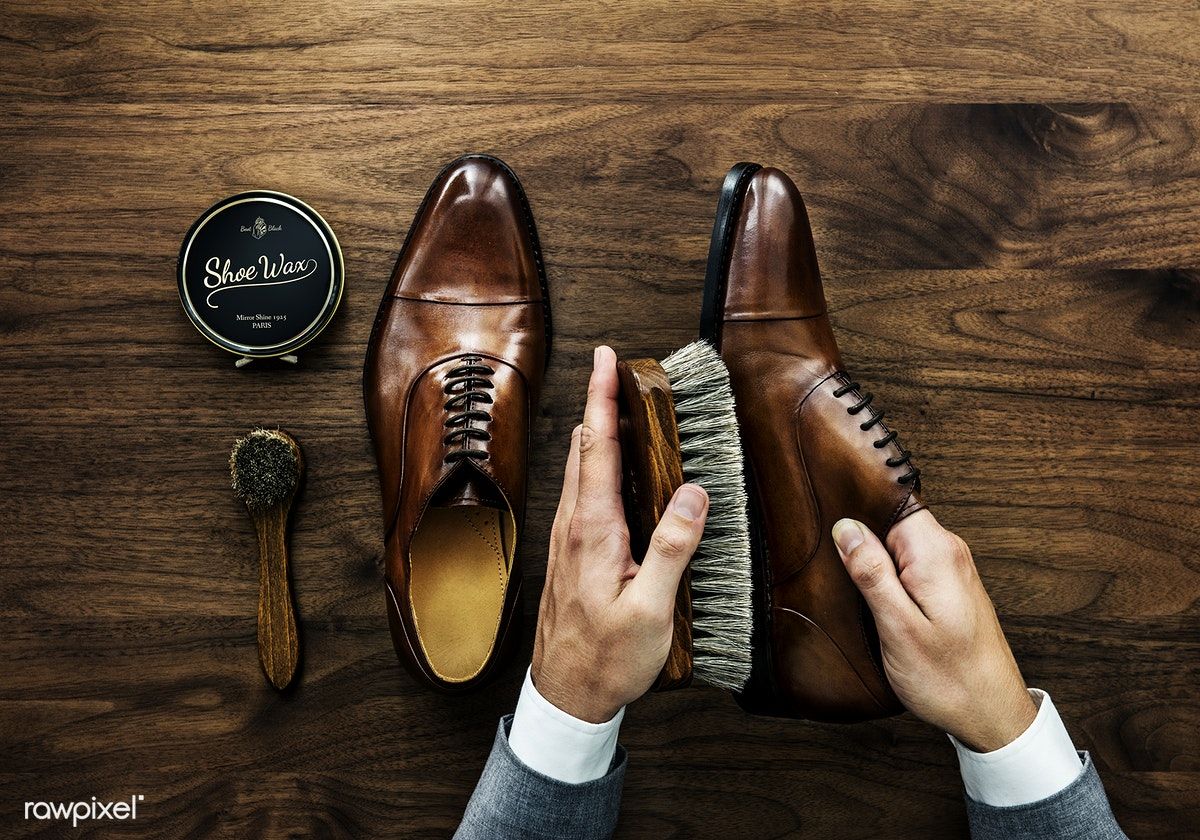
A finished shoe and an unfinished shoe are not the same species. Two Oxfords cut from the same hide, same last, same pattern, can feel entirely different once finished. This is what the finisher does.
Crust leather, the starting point
Before any finishing, the leather is pale, matte, unremarkable. This is crust: tanned, dried, flexible, but without character. Every signature colour a shoemaker is known for is invented after this stage.
The main treatments
Patina
The closest analogue in fashion to a signed painting. A finisher applies dye by hand, layer by layer, reading the grain and deepening the colour where the leather wants it. On a good patina you can see the movement of the cloth that applied it — a kind of controlled staining.
Antiquing
Dye is deliberately concentrated in the recesses of broguing, welt stitches, and creases. The high points catch light, the low points hold shadow. An antiqued Oxford reads three-dimensional in a way a uniformly dyed one never does.
Museum calf
A finishing style associated with high-end Italian houses: the patina is applied unevenly on purpose, creating visible light and dark zones across a single panel. When the shoe is new it looks like a mistake. After a year of wear it looks like the only honest way to finish leather.
Glazing
The final polish. Wax is worked into the surface with a deer bone or a cloth, then buffed. Done well, the mirror shine lasts through four or five wearings before needing a refresh. Done badly, it cracks the wax layer in a week.
What to ask before you buy
- Was the patina hand-applied, or is this a sprayed finish imitating one?
- How many coats of cream before the glaze?
- Will the colour develop further with care, or is this its final state?
A shoemaker who knows the answers is a shoemaker worth buying from. At Kabundji, the finishing is the slowest step of the process, and we like it that way.