7 April 2026
Why you should use a shoehorn (and how to choose the right one)
Kabundji Editorial · 4 min read
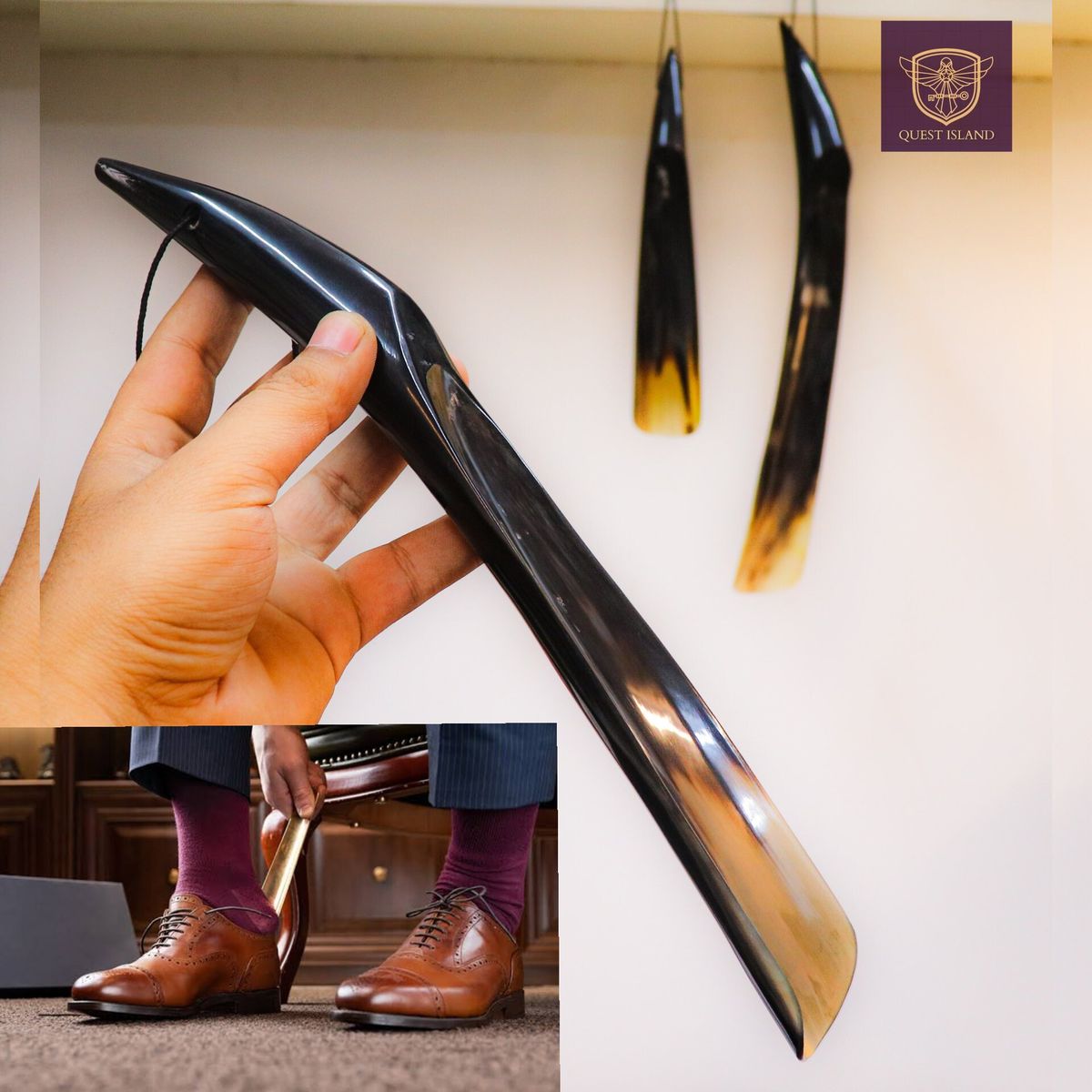
A shoehorn is the quietest piece of equipment in any serious wardrobe — and often the most neglected. Skip it and you pay a very slow tax: the counter of your shoe (the stiffener at the back of the heel) folds in, loses its curve, and begins to collapse. Once it collapses, no polish, no cream, no cobbler can bring it back.
What the shoehorn actually does
The shoehorn's job is not to make putting shoes on easier. That's the side-effect. Its real job is to preserve the geometry of the heel counter. When you force your foot past the back of the shoe, your heel compresses the counter against the sole. Do this twice a day, every day, for two years, and the counter deforms permanently.
A shoehorn creates a smooth, rigid ramp that your heel slides over instead of pushing against. The counter keeps its shape; the shoe keeps its life.
How to use one properly
- Loosen the laces fully. A shoehorn cannot compensate for a tight opening.
- Place the horn flat against the inside of the heel counter. The curved side faces your foot.
- Slide your foot in slowly. Let the horn guide the heel over the counter lip.
- Remove the horn before you stand up. Then tie the laces.
Total time: five seconds. The shoe repays the attention for a decade.
Which one to buy
Not all horns are equal. A few honest rules:
- Length: for everyday use, 40–45 cm lets you put shoes on without bending. A 15 cm travel horn works, but you have to sit down.
- Material: polished horn (actual cattle horn), lacquered hardwood, or stainless steel. Avoid plastic — it flexes, which defeats the point.
- Shape: look for a deep U-curve that matches the inside of your counter. A shallow horn will scratch.
At Kabundji, every pair of welted shoes leaves the workshop with a lifetime invitation to take care of them. A good shoehorn is how you answer that invitation.